
News
5 reasons to follow the MOOC Viral Hepatitis
Categories
About the course04/23/2024
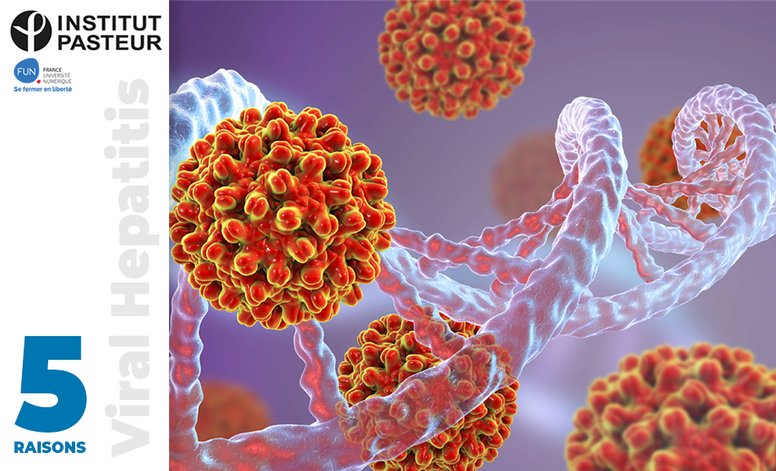
Do you want to know why is viral hepatitis still a major scourge of humanity? Discover how is WHO trying to put an end to hepatitis in the next 10 years?
Despite an effective vaccine against hepatitis B and a highly effective treatment of hepatitis C which , leads to virological cure in more than 90% of cases, viral hepatitis remain, the second leading cause of death by infectious disease in the world, just after tuberculosis. A high mortality rate is mainly observed in hepatitis B, B-Delta and C, while hepatitis A and E are most often benign except in certain populations. The mortality rate from hepatitis B, B-D and C is sometimes linked to fulminant hepatic failure at the early acute phase, but is more often related to chronic progression towards fibrosis, cirrhosis and liver cancer.
Here are 5 important reasons to take this course:
Reason no. 1: To understand the specific features of the 5 hepatitis viruses and the pathophysiology of hepatitis.
Reason no. 2: To know more about specific biological tests of the different types of hepatitis, enabling them to be diagnosed, screened and monitored.
Reason no. 3: To realize that, in many emerging countries, the high mortality rate of hepatitis is mainly related to the lack of large-scale screening and therefore of treatment.
Reason no. 4: To learn about the new treatments of hepatitis B and C, the measures to prevent mother-to-child transmission of hepatitis B virus, and the importance of vaccinating newborn babies at birth.
Reason no. 5: To find out about the targets set by the WHO to overcome viral hepatitis before 2030.
To register and find out more, click here.
End of registration: June 5, 2024
This training is part of the Digital Diploma in Infectious Diseases of the Institut Pasteur (DNM2IP).

Related posts

Alimentation durable : comment semer les graines du changement ?
Categories
About the course
Plongée dans l'univers des tiers-lieux : découvrir, partager, collaborer
Categories
About the course
Comment enclencher une révolution verte ?
Categories
About the course