Medical Mycology
Ref. 96021

Welcome to the fascinating world of fungi, agents of major infectious diseases!
- Duration: 11 weeks
- Effort: 33 hours
- Pace: ~3 hours/week
- Languages: English, french and spanish
What you will learn
At the end of this course, you will be able to:
- Outline the basic concepts of fungal taxonomy & ecology.
- Explain how to identify fungi from clinical specimens and cultures.
- Define risk factors involved in the development of fungal diseases.
- Describe systemic antifungal drugs.
- Discuss the relationship between mucosal and invasive fungal infections with HIV infection.
Description
Fungi are present everywhere! They play a major role in our ecosystem…as main decomposers of organic material, as producers of antibiotics or mycotoxins but also as responsible for human and animal infections. Fungi accounts for more than a billion of people suffering from fungal diseases resulting in at least a million human deaths per year!
The overall arise of fungal diseases is mainly due to major increase of host fungus-interaction opportunity. We can acquire fungi from the community, from the health care system or from international travels in endemic zones.
The Medical Mycology MOOC will provide a general overview starting from the basic concepts of fungal taxonomy & ecology. We will guide you through the different approaches for identification of fungi. You will hear about major trends in invasive fungal diseases as well as subcutaneous mycoses epidemiology, about new populations at risk, and emerging factors involved in the development of diseases. We will also cover topics related to antifungal drugs, and finally you will have an insight into the natural history of superficial and invasive fungal diseases, with a part dedicated to the HIV-associated infections.
Format
This MOOC is organized in 7 chapters. Each chapter is composed of 3 to 7 sessions. Each session is followed by two MCQs, allowing learners to test their understanding. At the end of each chapter, a set of MCQs is offered again. The videos are in English, with subtitles in English, French and Spanish. The MCQs are in English, French and Spanish.
Prerequisites
This MOOC is intended for biology students, from the undergraduate to the graduate level, doctors, teachers, researchers, and more generally for all those interested in medical mycology. A good scientific level is recommended to follow this MOOC (Bachelor of Science).
Assessment and certification
To follow this course, you can choose between two options:
- The Discovery Course gives access to videos, quizzes and discussions in the forum. No badge is issued for this course. Registration is free.
- The Qualifying Course leads to a certificate. In addition to the activities of the Discovery Course, you will have to take a one-hour supervised distance learning exam, consisting of 30 multiple-choice questions (MCQs) and obtaining 18 correct answers. The registration fee for the Qualifying Course is 150€.
Successful completion of the Qualifying Course gives you the opportunity to apply for the Institut Pasteur Online Diploma of Infectious Diseases (DNM2IP), which consists of 5 certificates to Institut Pasteur MOOCs on infectious diseases. To learn more, visit the Institut Pasteur's web page dedicated to this diploma.
Course plan
The MOOC is composed of 7 chapters :
- Ecology and burden (exposure…) - Brice Autier
Fungal cell structure and growth - Kumar Vishu
Classification & Taxonomy - Dea garcia-Hermoso
Asexual and Sexual development - Alberto Stchigel
- Sampling, transport and storage - Adélaïde Chesnay
Microscopic examination - Eric Dannaoui
Culture - Dea Garcia-Hermoso
Antigen detection - Paul Verweij
Advanced methods - Alexandre Alanio
Yeast identification - Marie Desnos-Ollivier
Molds identification - Dea Garcia-Hermoso
- Antifungal host immunity - Anne Puel
Primary and acquired immunodeficiencies - Olivier Lortholary
Endemic areas - Olivier Lortholary
Hospital-acquired fungal diseases - Tom Chiller
- Classes and mechanisms of action - Jochem Buil
Antifungal susceptibility testing - Jesus Guinea
Antifungal resistance mechanisms - Eveline Snelders
Therapeutic drug monitoring - Vincent Jullien
Mastering antifungal therapy - Fanny Lanternier
- Burden - Nelesh Govender
Pneumocystosis - Alexandre Alanio
Cryptococcosis - Olivier Lortholary
Endemic mycoses - Flavio de Queiroz Telles
Prophylaxis IFD in haematology - Thomas Rogers
- Candidiasis and dermatophytosis - Sarah Guegan
Tropical infections - Roderick Hay
Neglected infections (mycetoma, chromoblastomycosis) - Jose Arturo Martinez Orozco
- Fungemia - Matteo Bassetti
Aspergillosis - Olivier Lortholary & Dea Garcia Hermoso
Mucormycosis - Fanny Lanternier
Emerging yeast infections - Stéphane Bretagne
Emerging mold infections - Patricia Muňoz
Course team
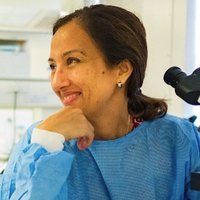
Dea GARCIA-HERMOSO
Categories
Director of the MOOC.
Deputy director of the French National Reference Center Invasive Mycoses and Antifungals, at the Institut Pasteur (Paris).
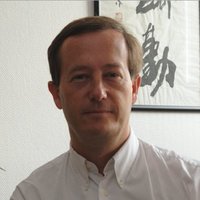
Olivier LORTHOLARY
Categories
Director of the MOOC.
Exceptional Class Professor at Université de Paris and Chair of the Department of Infectious and Tropical Diseases, at the Necker Hospital (APHP, Paris).
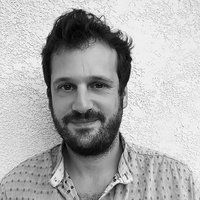
Timothée Boyer Chammard
Categories
MOOC community manager. Hospital practitioner in infectious diseases at Ajaccio Hospital (France).
Organizations
License
License for the course content

Attribution-NonCommercial-NoDerivatives
You are free to:
- Share — copy and redistribute the material in any medium or format
Under the following terms:
- Attribution — You must give appropriate credit, provide a link to the license, and indicate if changes were made. You may do so in any reasonable manner, but not in any way that suggests the licensor endorses you or your use.
- NonCommercial — You may not use the material for commercial purposes.
- NoDerivatives — If you remix, transform, or build upon the material, you may not distribute the modified material.
License for the content created by course participants
All rights reserved
"All rights reserved" is a copyright formality indicating that the copyright holder reserves, or holds for its own use, all the rights provided by copyright law.